
Discover Modern Amateur Radio Technologies
Amateur Radio (or “Ham Radio”) isn’t just about talking on local voice repeaters. Today, it is an expansive, high-tech hobby that sits right at the intersection of computer science, emergency resilience, outdoor recreation, and hardware hacking.
Whether you are a software developer, a cybersecurity professional, a maker, or an outdoor enthusiast, there is a technical niche here for you. Explore how to get your wings and join our active operations below.
🪶 Get Your Wings: The Core Foundations
Before diving into advanced orbital tracking or digital data modes, every operator starts with the essentials. These three core steps will clear the air, eliminate mic fright, and get you licensed fast.
1. Choose Your License
The entry-level Technician License unlocks all VHF/UHF frequencies, giving you full access to local repeaters, emergency nets, and space satellites. Best part? No Morse code testing required since 2007!
2. Master the Radio Lingo
Cure "mic fright" instantly by demystifying simple operating protocols. Learn the International Phonetic Alphabet, essential Q-signals (like QTH and QSL), and basic etiquette for making standard contacts confidently.
3. The $50 Starter Shack
You don't need a multi-thousand dollar base station to get started. A simple $25–$35 handheld radio paired with a homemade, DIY tape-measure directional antenna is enough to let you track and talk over major regional arrays.
🚀 Choose Your Adventure: Club Technical Tracks
Once you have your bearings, it’s time to choose your specialization path. Our active club units manage five high-tech operational tracks throughout Brunswick County:
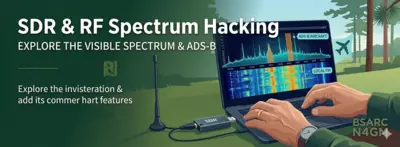
SDR & RF Hacking
Connect a simple $25 Software Defined Radio USB dongle to a computer to analyze the invisible spectrum. Explore radio waves to decode live aircraft telemetry (ADS-B), track weather satellites, or legally monitor local digital traffic.
Featured Coordinator: [Position Open / Seeking Input]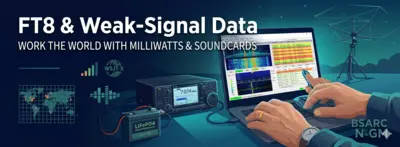
FT8 & Weak-Signal Data
Welcome to the data revolution. Using desktop software tools like WSJT-X synced to an HF transceiver, hams can automatically complete global contacts using digital tones buried far below the background atmospheric noise floor.
Featured Coordinator: [Position Open / Seeking Input]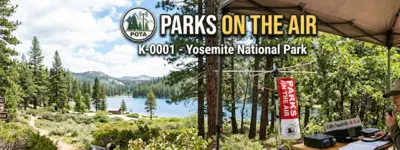
Parks on the Air (POTA)
The fastest-growing off-grid radio sport. Pack light, go mobile, and deploy battery-powered HF stations from local, state, or national parks. Throw a temporary wire antenna into a tree and bridge contacts across oceans from a picnic table.
Club Trail Operations: Active Field Unit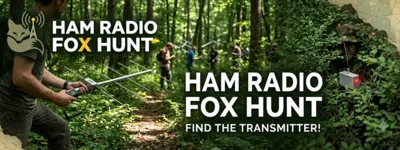
Fox Hunting / ARDF
Amateur Radio Direction Finding is a live-action geolocation sport. Using handheld directional antennas (Yagis) and attenuators, operators work against the clock to track down hidden, automated transmitters hidden in regional parks.
Event Operations: Club Youth & Family Run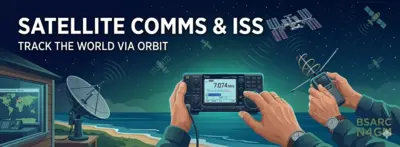
Satellite Comms & ISS
Track low-Earth orbit spacecraft and communicate directly with the International Space Station. Using simple handheld directional antennas and dual-band transceivers, hams can make voice and packet contacts through orbital repeaters passing directly over Brunswick County.
Orbital Tracking Operations: Active Field Demonstrations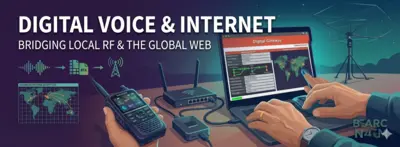
Digital Voice & Internet
Bypass strict HOA and property antenna restrictions completely. Learn how to use digital voice protocols (Fusion, DMR, D-Star) and pocket internet hotspots to hold crystal-clear worldwide contacts using a simple handheld radio.
Linking Operations: Regional Net Gateways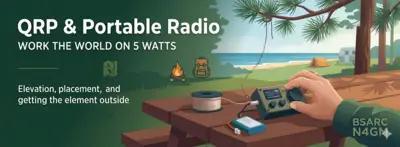
QRP & Portable Adventure
Discover the thrill of operating low-power (QRP) out in the field. Learn how to throw a wire into a tree, run your station on portable battery power, and work the world from a park picnic table or a beach chair using compact trail rigs.
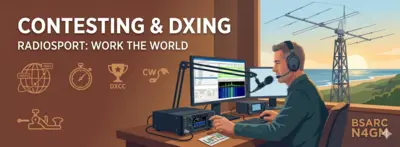
Contesting & Radiosport (DXing)
Test your station's efficiency and sharpen your operating skills in Radiosport. Learn how to hunt rare international "DX" stations, log rapid-fire exchanges during major contest weekends, and pile up awards.
🚀 Ready to Take Your Next Steps?
If you’re eager to get on the air, build your own equipment, or participate in local emergency service exercises, we’ve laid out everything you need right here:
- Step 1: Check Out Our Welcome Guide: Read through our official New Member Welcome Kit to see how our regional infrastructure runs and how to apply.
- Step 2: Join a Meeting: Guests are always welcome! Check the homepage schedule to see if our next alternating session is at the Calabash EMS Building or the BEMC Headquarters in Supply.
📽️ BSARC Presentations & Educational Seminars
Want to dive deeper into modern amateur radio technology? Browse slide decks, custom web presentations, and project walkthroughs delivered by club members during our monthly meetings:
AI & Modern DSP in the Radio Shack
Presented by Mark Sergent (KA4EVR) — An introduction to utilizing machine learning algorithms, artificial intelligence, and digital signal processing (DSP) tools to clean up weak signals and enhance shack operations.